All workCase study
A store you canactually hand off.
I built an accessibility-first direct-to-consumer storefront as a custom Shopify theme, kept it as source, and left the client with a way to change it alongside their favorite AI agent without handing the keys to a black box.
- What I built
- An accessibility-first direct-to-consumer storefront
- Built as
- A custom Shopify theme kept as source
- Changed through
- Reviewed files, previews and Shopify tooling
- Who decides
- Hutch, with AI agents doing the typing
- Status
- Preview build · not launched
The useful kind of custom
This is a preview build. It has not launched.
The client and the product are not named here. That is deliberate. The work is fair game: a storefront built to be manageable, with clear language and generous controls.
I did not start with a stock theme and shuffle its settings. I did not send the client home with a headless app that needs a specialist every time a sentence changes. I built the theme as source, with the parts people see and use under our control.
For the technical reader: the theme, templates, styles, scripts and translations live in a repository. Shopify hosts the storefront; the source remains readable, reviewable and portable.
Change it without playinghunt-the-setting.
The storefront is not a pile of clicks somebody has to remember. It has a repeatable path from a request to a checked change.
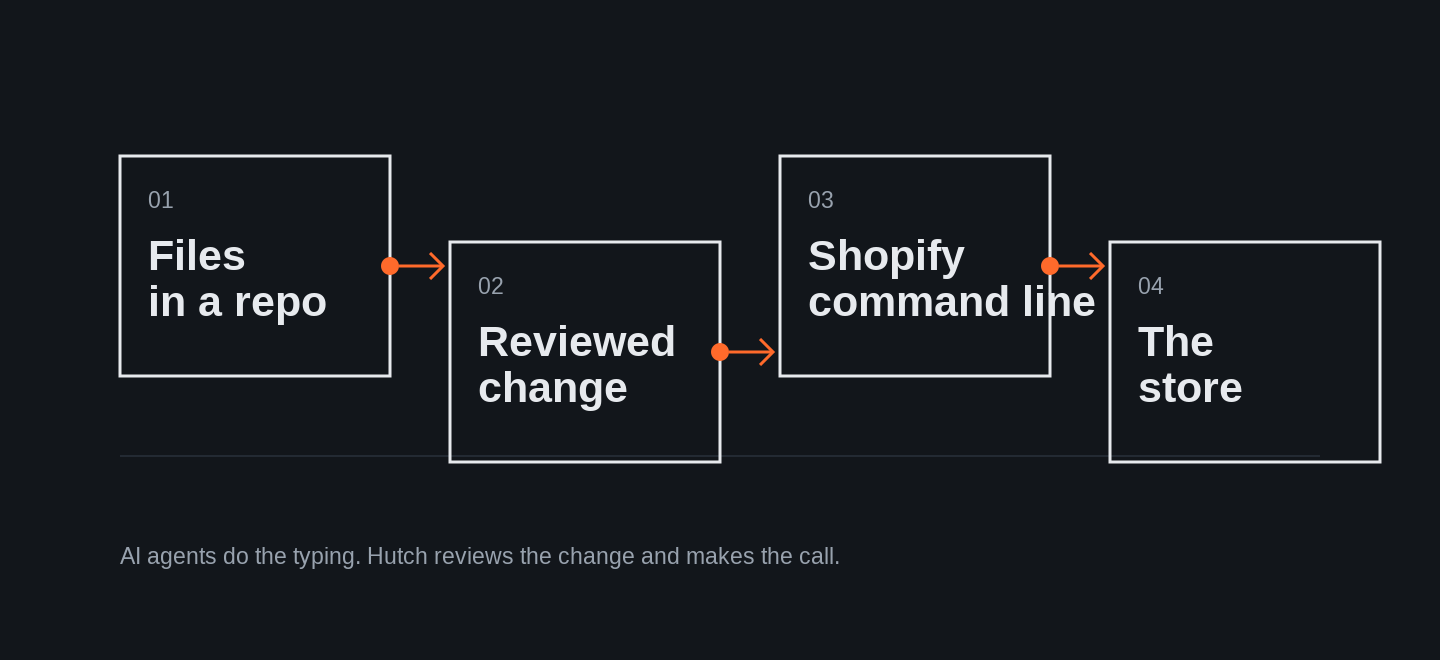
The store starts as files
The catalog, pages, menus and policy copy are files too. Shopify's own command-line tool writes the approved version to the store.
That means a real change has a diff. You can see what moved, what was added and what was removed before it lands. It also means the next person does not have to reverse-engineer a theme editor to find a sentence.
The name and mark are settings, not a scavenger hunt through templates. I renamed the preview once during the build; it was a small settings change, not a rebuild. That is the point.
For the technical reader: content is represented in repository files and written through Shopify tooling. The theme can be linted and previewed before a release; content writes are reviewed because they deserve the same care as code.
The parts people have to use
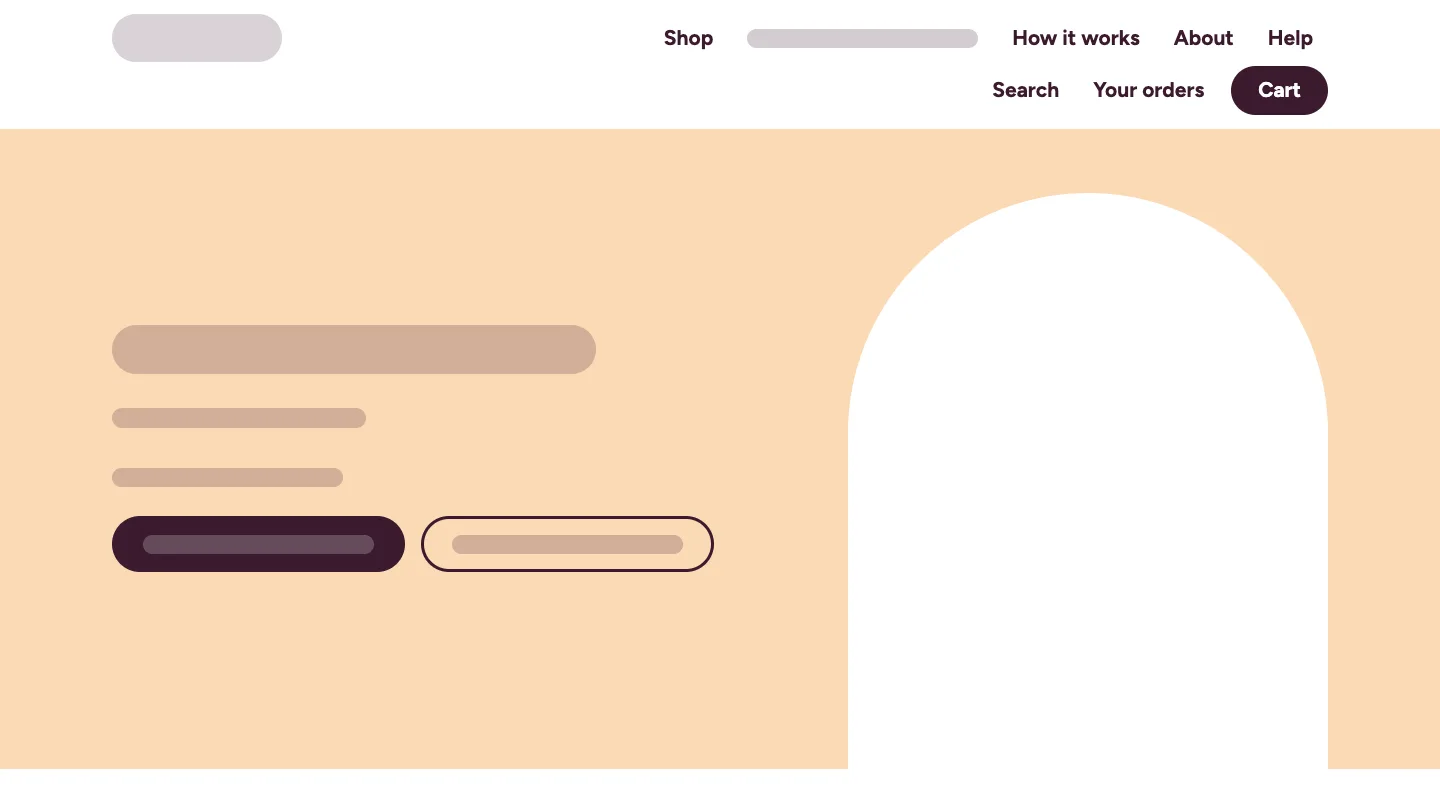
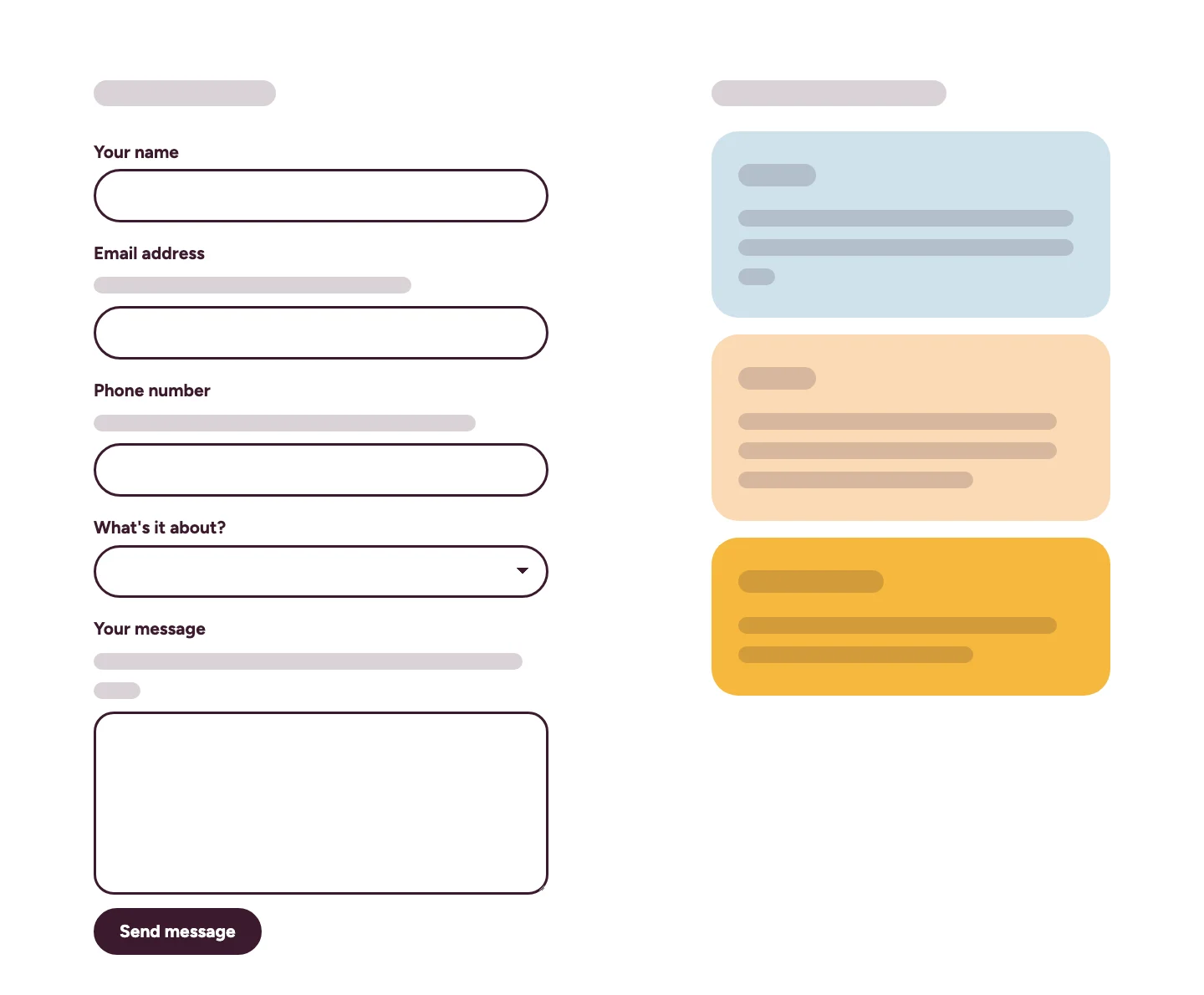
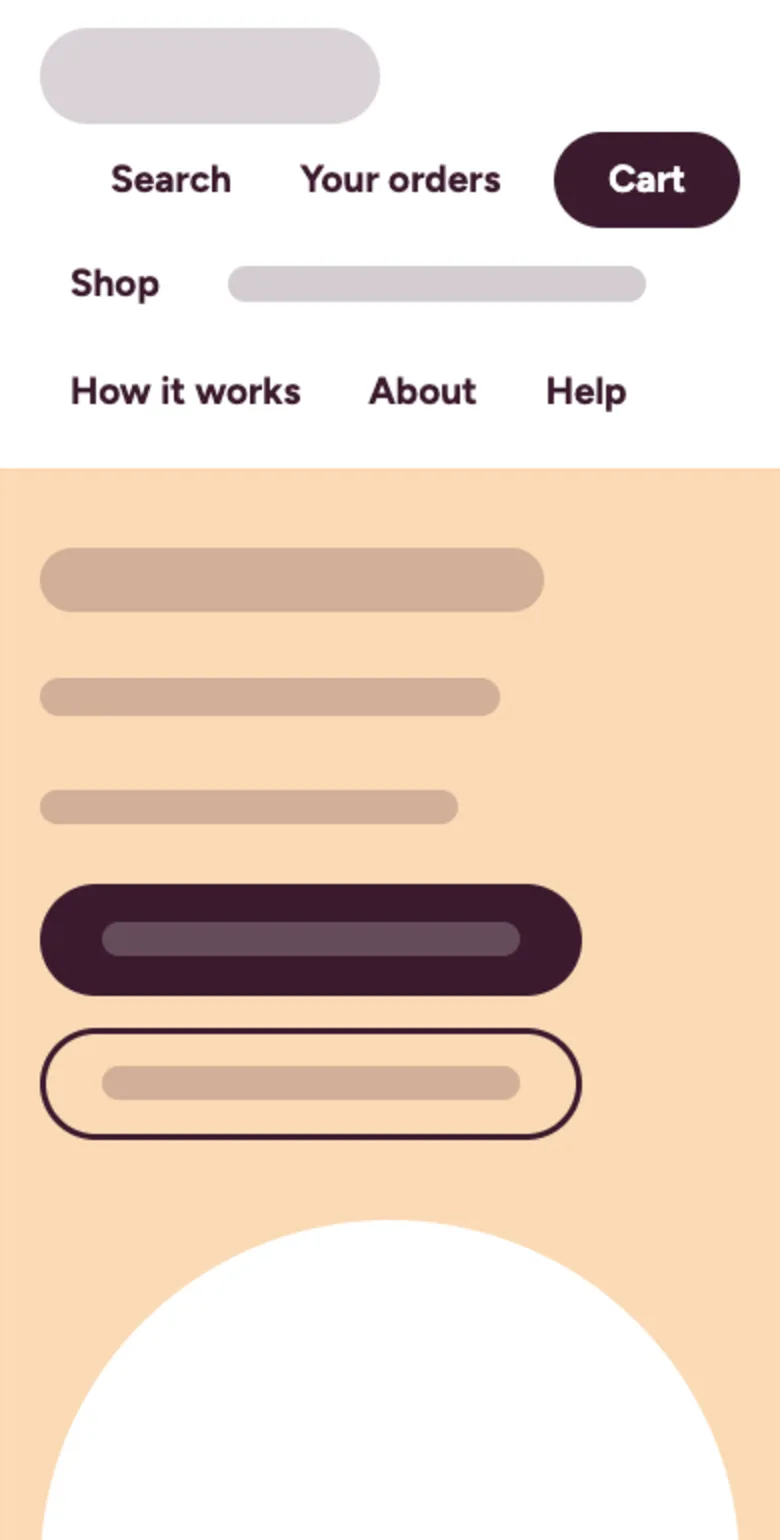
These frames show the interface craft: a desktop home layout, the contact form with its fields and send button, and the phone-width home layout. Details are treated to protect an unreleased product.
AI can do the typing. It does not get the last word.
AI agents built and changed this storefront through reviewed changes. I made the calls.
Before a change ships, it gets checked in the source, checked in a preview, and driven through the journeys that matter. That includes automated checks, browser checks at phone and desktop sizes, and a keyboard walk. The goal is simple: do not discover that a control is too small or a route is broken after the work has become somebody else's problem.
Accessibility checking is part of that gate, but it is not a magic stamp. Automated tools can catch real defects. They cannot tell me whether a sequence makes sense, whether words are clear, or whether a person can use it comfortably on a hard day. That takes people.
For the technical reader: the build used theme linting, responsive page checks, automated accessibility scans, keyboard checks and preview-driven journeys. Those checks find a useful slice of accessibility issues, not all of them.
Where my control ends
A clean handoff includes the things I do not pretend to own.
- The owner and Shopify handle payments, tax setup, the domain, app installs, hosted checkout and account pages.
- The theme handles the storefront experience, content structure and the pieces a custom build can reasonably control.
- The review gate handles changes to source. It does not replace business decisions, legal advice or testing with real people.
That line is not a catch. It is how I avoid selling a client a fairy tale. The money, identity and account decisions stay with the owner. The work that can be made repeatable gets a repeatable workflow.
Got something like this on your plate? The first half hour is free, and I'll tell you straight whether you need me.